Character Creation
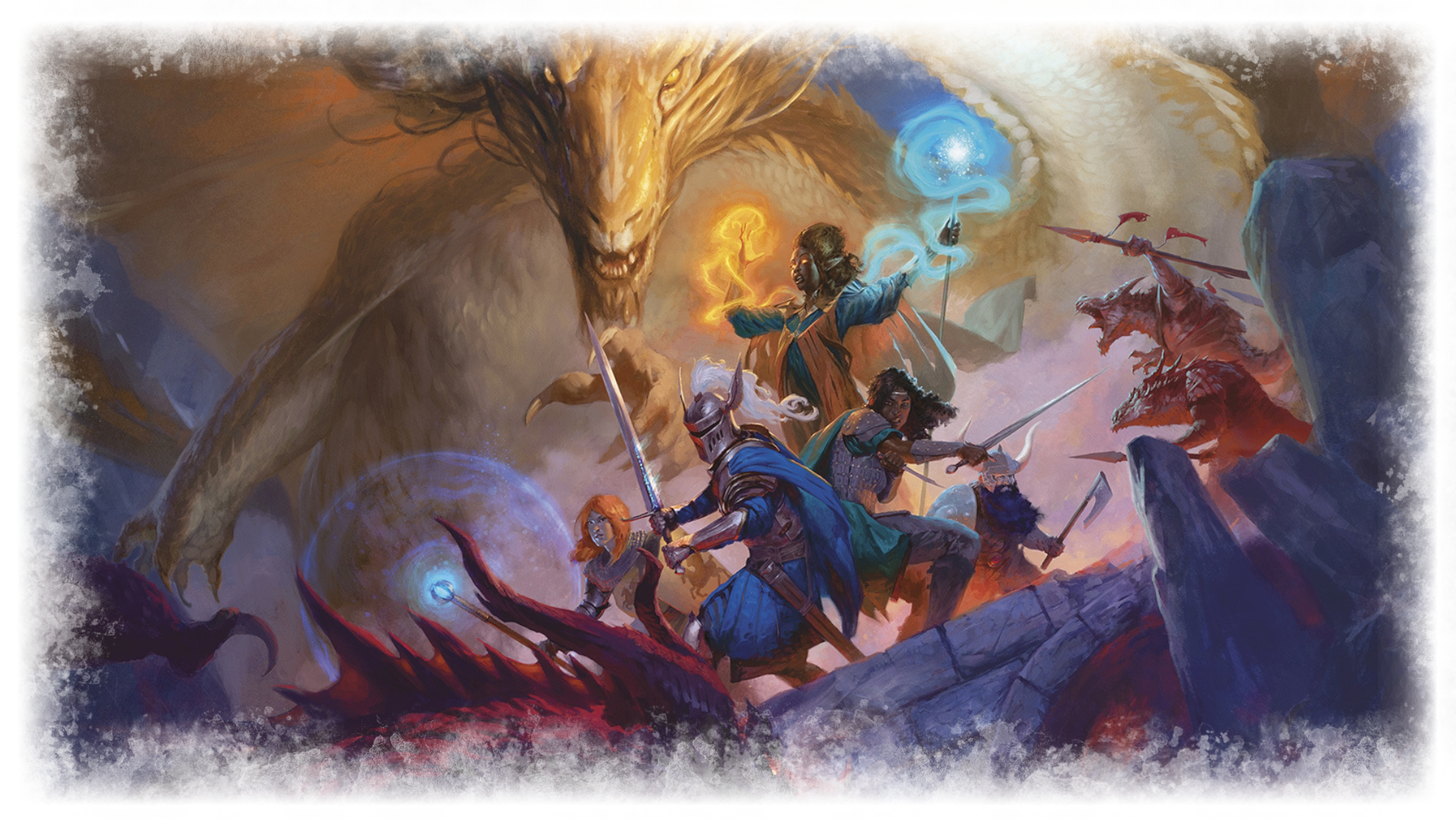
You'll record the main details of your character on a character sheet. The primary options we use to create our character sheets are the following:
-
DnD_2024_Character-Sheet.pdf - This sheet can either be printed out or used digitally with a PDF editing software.
-
Roll20 - Roll20 allows you to make D&D characters on their website for free.
Creating Your Character
Step 1: Choose a Class
Every adventurer is a member of a class. A class broadly describes a character's vocation, special talents, and favored tactics. (It may also be worth looking ahead at subclasses, though you will not need to make a choice until your character reaches level 3 of their class.)
A class grants you special abilities unique to that class, as well as a variety of proficiencies.
Check out the Class Guide for an overview of all classes and subclasses.
Step 2: Choose a Species
Your character's species grants your character certain traits and determines their size and speed.
Step 3: Choose a Background
A character's background represents the place and occupation that were most formative for the character.
A background grants you an Origin Feat, as well as proficiency in two skills and one tool.
Keep in mind that the background you choose also influences your character's ability scores (step 6). Refer to the following table to check what backgrounds benefit which ability scores:
| Ability | Backgrounds |
|---|---|
| Strength | Artisan, Entertainer, Farmer, Guard, Noble, Sailor, Soldier |
| Dexterity | Artisan, Charlatan, Criminal, Entertainer, Guide, Sailor, Scribe, Soldier, Wayfarer |
| Constitution | Charlatan, Criminal, Farmer, Guide, Hermit, Merchant, Sage, Soldier |
| Intelligence | Acolyte, Artisan, Criminal, Guard, Merchant, Noble, Sage, Scribe |
| Wisdom | Acolyte, Farmer, Guard, Guide, Hermit, Sage, Sailor, Scribe, Wayfarer |
| Charisma | Acolyte, Charlatan, Entertainer, Hermit, Merchant, Noble, Wayfarer |
And refer to this table to check what backgrounds grant which origin feats:
| Origin Feat | Backgrounds |
|---|---|
| Alert | Criminal, Guard |
| Crafter | Artisan |
| Healer | Hermit |
| Lucky | Merchant, Wayfarer |
| Magic Initiate | Acolyte (Cleric Initiate), Guide (Druid Initiate), Sage (Wizard Initiate) |
| Musician | Entertainer |
| Savage Attacker | Soldier |
| Skilled | Charlatan, Noble, Scribe |
| Tavern Brawler | Sailor |
| Tough | Farmer |
Step 4: Choose Known Languages
Your character knows at least three languages: Common plus two languages of your choice from the Standard Languages table.
Standard Languages
| 1d12 | Language | Origin |
|---|---|---|
| -- | Common | Sigil |
| 1 | Common Sign Language | Sigil |
| 2 | Draconic | Dragons |
| 3-4 | Dwarvish | Dwarves |
| 5-6 | Elvish | Elves |
| 7 | Giant | Giants |
| 8 | Gnomish | Gnomes |
| 9 | Goblin | Goblinoids |
| 10-11 | Halfling | Halflings |
| 12 | Orc | Orcs |
The Rare Languages table lists languages that are either secret or derived from other planes of existence and thus less widespread in the worlds of the Material Plane. Some features let a character learn a rare language.
Rare Languages
| Language | Origin |
|---|---|
| Abyssal | Demons of the Abyss |
| Celestial | Celestials |
| Deep Speech | Aberrations |
| Druidic | Druidic circles |
| Infernal | Devils of the Nine Hells |
| Primordial (including dialects Aquan, Auran, Ignan, and Terran) | Elementals |
| Sylvan | The Feywild |
| Thieves' Cant | Various criminal guilds |
| Undercommon | The Underdark |
Step 5: Determine Starting Equipment
Your background and class both provide starting equipment. Any coins that you gain at this step can be immediately spent on equipment from the player's handbook (see Mundane Equipment and Mundane Items below). In addition, you can have one trinket at no cost (see Trinkets below).
Mundane Equipment
Armor
Weapons
Adventuring Gear
Mundane Items
Step 6: Determine Ability Scores
Much of what your character does in the game depends on the character's six abilities.
To determine your character's ability scores, you first generate a set of six numbers using the instructions below and then assign them to your six abilities.
Generate Your Scores
Determine your ability scores by using one of the following methods. Refer to your DM on which method to use.
Standard Array. Use the following six scores for your abilities: 15, 14, 13, 12, 10, 8.
Random Generation. Roll four d6s and record the total of the highest three dice. Do this five more times, so you have six numbers.
Adjusted Random Generation. Roll four d6s and record the total of highest three dice. Do this four more times, so you have five numbers. Add up the total of these numbers and subtract that from 72. The result will be your sixth stat (minimum of 6, maximum of 18).
Point Cost. You have 27 points to spend on your ability scores. The cost of each score is shown on the Ability Score Point Costs tables. For example, a score of 14 costs 7 of your 27 points. This online calculator can be a good tool to use for this.
| Score | Cost |
|---|---|
| 8 | 0 |
| 9 | 1 |
| 10 | 2 |
| 11 | 3 |
| 12 | 4 |
| 13 | 5 |
| 14 | 7 |
| 15 | 9 |
Adjust Ability Scores
Your background lists three abilities; increase one of those scores by 2 and a different one by 1, or increase all three by 1. None of these increases can raise a score above 20.
Some players like to increase their class's primary ability, while others prefer to increase a low score.
Ability Scores and Modifiers
| Score | Modifier |
|---|---|
| 3 | -4 |
| 4-5 | -3 |
| 6-7 | -2 |
| 8-9 | -1 |
| 10-11 | +0 |
| 12-13 | +1 |
| 14-15 | +2 |
| 16-17 | +3 |
| 18-19 | +4 |
| 20 | +5 |
Step 7: Fill in the Details
Using the choices you've made, fill in the remaining details on your character sheet.
Describe Appearance and Personality
Note your character's appearance and personality. Consider what your ability scores might say about your character and how they look or act.
Choose an Alignment
Choose your character's alignment from the options below, and note it on your character sheet.
D&D assumes that player character's aren't of an evil alignment. Check with your DM before making an evil character.
- Lawful Good (LG)
- Neutral Good (NG)
- Chaotic Good (CG)
- Lawful Neutral (LN)
- Neutral (N)
- Chaotic Neutral (CN)
- Lawful Evil (LE)
- Neutral Evil (NE)
- Chaotic Evil (CE)
Record Class Features
Look at your class's feature table, and write down the level 1 features. Some class features offer choices. Make sure to read all your features and make any offered choices.
Fill in Numbers
Note these numbers on your character sheet.
Saving Throws. For the saving throws you have proficiency in, add your Proficiency Bonus to the appropriate ability modifier and note the total.
Skills. For skills you have proficiency in, add your Proficiency Bonus to the ability modifier associated with that skill, and note the total. You might also wish to note the modifier for skills you're not proficient in, which is just the relevant ability modifier.
Passive Perception. Sometimes your DM will determine whether your character notices something without asking you to make a Wisdom (Perception) check; the DM uses your Passive Perception instead. Passive Perception is a score that reflects a general awareness of your surroundings when you're note actively looking for something. Use this formula to determine your Passive Perception score:
Passive Perception = 10 + Wisdom (Perception) check modifier
Hit Points. Your class and Constitution modifier determine your Hit Point maximum at level 1, as shown on the Level 1 Hit Points by Class table.
Level 1 Hit Points by Class
| Class | Hit Point Maximum |
|---|---|
| Barbarian | 12 + Con. modifier |
| Fighter, Paladin, or Ranger | 10 + Con. modifier |
| Bard, Cleric, Druid, Monk, Rogue, or Warlock | 8 + Con. modifier |
| Sorcerer or Wizard | 6 + Con. modifier |
Hit Point Dice. Your class's description tells you the die type of your character's Hit Point Dice (or Hit Dice for short); write this on your character sheet. At level 1, your character has 1 Hit Die. You can spend Hit Dice during a Short Rest to recover Hit Points. Your character sheet includes a space to note how many Hit Dice you've spent.
Initiative. Write your Dexterity modifier in the space for Initiative on your character sheet.
Armor Class. Without armor or a shield, your base Armor Class is a 10 plus your Dexterity modifier. If your starting equipment includes armor or a Shield (or both), calculate your AC using the formula on the armor table).
Attacks. In the Weapons & Damage Cantrips section of the character sheet, write your starting weapons. The attack roll bonus for a weapon with which you have proficiency is one of the following unless a weapon's property says otherwise.
Melee attack bonus = Strength modifier + Proficiency Bonus
Spell attack bonus = Dexterity modifier + Proficiency Bonus
Look up the damage and properties of your weapons in the weapons chart.
You add the same ability modifier you use for attacks with a weapon to your damage rolls with that weapon.
Spellcasting. Note both the saving throw DC for your spells and the attack bonus for attacks you make with them, using these formulas:
Spell save DC = 8 + spellcasting ability modifier + Proficiency Bonus
Spell attack bonus = spellcasting ability modifier + Proficiency Bonus
Spell Slots, Cantrips, and Prepared Spells. If your character gives you the Spellcasting or Pact Magic feature, your class features table shows the number of spell slots you have available, how many cantrips you know, and how many spells you can prepare.
Choose your cantrips and prepared spells, and note them-along with your number of spell slots-on your character sheet.
Name Your Character
Choose a name for your character, and write it on your character sheet.
Create Final Details
As you finish creating your character, consider whether you'd like to make up any other details about the character such as:
- What person or people do you care most about?
- What's your deepest fear?
- On your adventures, will you seek knowledge, wealth, glory, enlightenment, justice, mercy, power, or something else?